

Many people today silently battle extensive or persistent hair fall, hairline recession, or hair thinning. Their loss of natural hair lowers their image and confidence. Thankfully, there is the most reliable solution available with a hair transplant surgeon in Gurgaon, to restore natural hair growth- a hair transplant! But the question is: Is a hair transplant permanent, or will hair fall again?
Well, it’s a valid worry. You need to confirm the longevity of the results before deciding to invest your time and money in a procedure. The good news? Hair transplants will offer long-term hair growth, but will not help stop further hair loss! This article is a simple, clear breakdown of how hair transplants work and their outcomes, including influencing factors, especially for people considering a hair transplant in Gurgaon.
A permanent hair loss or hair thinning is often genetically induced, a condition called androgenetic alopecia (pattern baldness). In this type of hair loss, hair follicles shrink gradually and start producing thinner and weaker hair, ultimately no new hair, due to high sensitivity to DH-T (dihydrotes-tosterone) hormone. The condition affects only certain areas of the scalp: the hairline, temples, and the crown.
The sides and the back of the scalp have DHT-resistant hair follicles that keep growing hair throughout life, and this is exactly what enables hair transplantation.
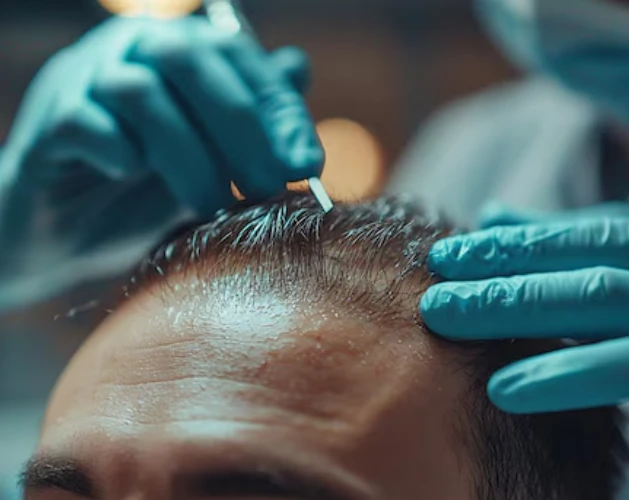
A Hair Transplant surgery involves the shifting of viable, strong, or healthy hair follicles from the back or sides of the scalp (donor site) to areas affected with hair loss (recipient site). The transplanted hair follicles retain their resistance to shedding and, after integrating with the existing hair, produce hair at the recipient site just like normal hair.
Coming back to the most asked question, here’s a concise answer: Yes, hair transplant outcomes are permanent. The reason is the implantation of hair follicles that are resistant to the DH-T hormone and hair thinning/shedding.
Initially, successfully transplanted hair will shed due to surgery shock. That’s normal. But the new hair will grow naturally.
The hair follicles will go through all phases of the normal hair growth cycle. Ultimately, the new hair can be washed, styled, and cut just like normal hair for the rest of one's life.
Keep reading to have a thorough understanding of the process.
The noticeable hair fall at the transplantation site after a few weeks of surgery is often a normal part of recovery. That experts call “shock loss”. It is the result of the short-term entry of hair follicles into the resting/exogen phase of the hair growth cycle.
What’s important to understand is that the transplanted hair strands shed while their roots stay viable, beneath the scalp. They again produce hair.
The transplanted hair follicles will never shrink, weaken, or stop growing hair for life. But, for those experiencing progressive hair loss, the non-transplanted hair follicles may, over time, shrink, weaken, or stop growing new hair. That’s why a hair transplant doctor advises supportive hair therapies like PRP hair therapy, GFC hair therapy, low-level laser therapy, and hair growth medications to protect the quality/health of existing natural hair and boost natural hair growth.
Understanding how hair transplant results gradually show up can help you set realistic expectations.
Here’s the typical hair growth timeline:
1-2 Weeks- Initial healing and slight scabbing
1-2 Months- Shock hair loss
3-4 Months- Hair regrows
6 Months- Visible, natural hair restoration
9-12 Months- Head full of healthy, thick, natural hair.
Even though the transplanted hair follicles are genetically programmed to stay for a lifetime, the transformed look and healing depend on the:
Hair transplants are undoubtedly the confidence- restoring, long-term solution for thinning hair or bald patches. The transplanted hair follicles will always grow natural-looking hair. Although the transplanted hair will shed, it will, over time, be replaced with normal growing hair.
A detailed consultation with a reputed hair transplant surgeon is important in confirming a hair transplant and the best-suited method. Selecting the right clinic and surgeon is necessary for ensuring natural, lasting results and for professional care and guidance throughout the journey.
In Gurgaon, you can receive the safest, most precise, tailored, highly satisfactory, affordable, and natural hair restoration from skilled, extensively experienced hair restoration specialists, Dr. Shilpi Bhadani and her team.
People choose them:
Hair transplants are permanent as they are sourced from the back or sides of the scalp- the areas that are resistant to thinning or balding. They grow hair just like normal hair. However, the existing natural hair around the hair transplants is likely to thin or shed permanently over time if hair loss is progressive.
At any time during the first two months of hair transplant recovery, hair shedding is observed in the transplanted area. It's temporary and a result of shock from surgery. Though the transplanted hair will fall out, the transplanted hair follicles stay active beneath the scalp and resume growing hair in 3-4 months.
Hair loss will never affect the transplanted sites again, but it will affect the non-transplanted sites. The existing natural hair will still be prone to thinning and falling out over time in patients with pattern baldness. Hair restoration experts recommend hair growth-promoting therapies after a hair transplant to maintain overall hair density and quality.
Hair transplant surgery, be it FUT or FUE, is always carried out under the effect of local anaesthesia. Both the donor and recipient sites will be numbed before hair graft extraction and implantation to ensure no discomfort. However, there will be slight soreness, swelling, and discomfort later, which will resolve soon and are manageable with prescription medications and proper aftercare.
A single hair transplant session is usually enough to move healthy follicles to the entire thinning or balding area. But some patients may need another session or more for better density. The required session count is determined by the surgeon based on the extent of hair loss and the number of grafts required.
Request An Appointment
Recent Post

 August 24, 2026

August 20, 2026
August 17, 2026
August 13, 2026
July 08, 2026