
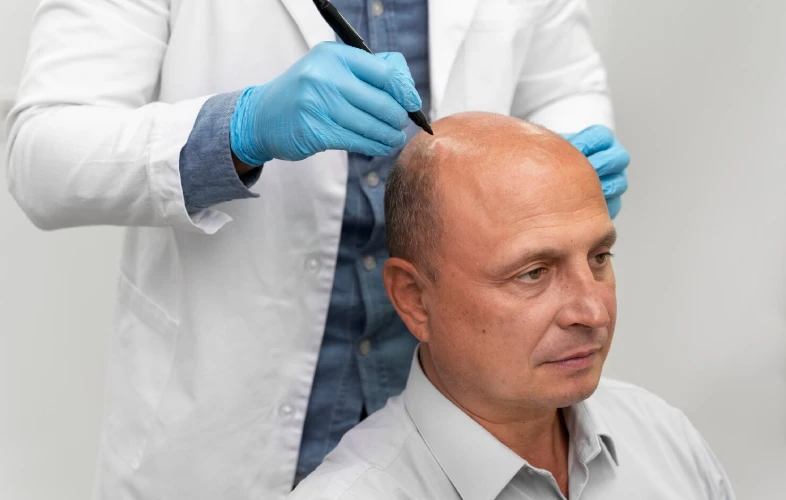
Misconceptions surrounding hair transplants often spread like wildfire, leaving hair loss sufferers anxious, confused, and hesitant to pursue them. From unwarranted fear of getting unnatural results to beliefs that hair transplants are meant for only older men, myths about hair transplants can prevent people from choosing hair transplants. Thankfully, with advancements in hair restoration, many beliefs about hair transplants driven by rumours or online speculation are no longer prevalent.
From a hair doctor’s perspective, it’s important not to believe or discuss outdated myths, but rather to focus on the medical reality of hair transplantation. Understanding the facts about hair transplant in Gurgaon, by Dr. Shilpi Bhadani, a trichologist and hair transplant surgeon at SB Trichology Clinic, can help patients set realistic expectations and approach the surgery with clarity and full faith.
Here are some myths and facts discussed:
Hair transplantation is about harvesting and implantation of individual hair follicle units- hair grafts that contain 1-4 hair strands. It means relocation of hair strands by their roots.
Hair loss can affect anyone, be it men, women or transgender, and so anyone could need a natural hair restoration. With advanced hair transplant techniques, patients of any gender can achieve desired results. The hair transplant works equally well for all s-exes.
Getting hair transplants means undergoing surgery, and that’s believed to be painful. But the pain is not really felt with the use of local anaesthesia. Post-operative discomfort is also tolerable and subsides soon. It is even manageable with pain-relieving medications.
New hair can’t grow overnight. The hair follicles implanted in the recipient area need time to completely settle and grow naturally to full length. Within the first month after surgery, the transplanted hair sheds due to surgical shock. Thereafter, hair regrows gradually and becomes noticeable in 4 to 6 months, with complete results appearing in up to 12 months or beyond.
Hair transplants work for individuals with hairline recession, thinning hair, and hair loss of any degree. Whether hair transplants will be successful in a given case can only be determined by the surgeon.
The traditional hair transplant approach, the FUT, involves a linear incision that heals to leave a large scar. But with modern hair transplant techniques like FUE and DHI, the scarring is almost undetectable even if hair is kept short, as micro incisions are created.
Hair transplant total price is variable and depends on multiple factors like the number of grafts required to cover the whole bald or thinning area, method of hair transplant (FUT or FUE), the surgeon and anaesthetist fees, the clinic location and reputation, technologies employed, and add-on costs before and after hair transplant. It's worth the investment, as with the right technique, long-lasting hair restoration is possible. In recent years, hair transplants have become accessible to most patients.
Hair transplant candidates can be aged in their 20s if they have an established pattern of alopecia. But the best candidates are usually adults aged 30 to 70.
Gentle scalp and hair care is a must initially, until healing. But once the donor and recipient areas heal, hair can be washed and styled as existing native hair for the rest of one's life.
Transplanted hair follicles are resistant to DHT hormone and shedding. But further hair loss can still occur in areas with native hair.
With the latest FUE hair transplant approach, each hair graft is implanted with precision and accuracy to match the natural hair growth pattern.
Hair grafts are implanted on the top layer of the scalp, far away from the brain. Thus, no such damages are possible.
The hair that is taken as a graft will be transferred to the recipient area but the hairs that are left behind will grow as usual.
Transplanted hair is not susceptible to DHT hormones that trigger hair fall. There is no requirement for special maintenance or hair-growth-stimulating medications. Yes, initial phases of hair growth will need supportive therapy which is for a short duration.
Advanced hair transplant techniques are less invasive and so initial recovery is shorter, often of a week.
Hair Transplant is a sure-shot only for:
A consultation with an expert, trained hair doctor, is required to confirm the patient’s eligibility for a hair transplant. During consultation, the stage of hair loss is assessed, donor-recipient ratio analysis is performed, the entire scalp is digitally examined, and the patient’s medical records/lifestyle are reviewed to assess candidacy.
Don’t let hair transplant myths make you step back from seeking it as a solution for your hair loss concern. Modern hair transplant techniques are more comfortable, yield more natural outcomes, have minimal recovery time, and provide satisfactory results even for patients with a low budget.
If you want to check for your suitability for a hair transplant in Gurgaon, schedule a consultation with Dr. Shilpi Bhadani at SB Trichology Clinic today and regain your natural hair and confidence.
Request An Appointment
Recent Post

 August 24, 2026

August 20, 2026
August 17, 2026
August 13, 2026
July 08, 2026