
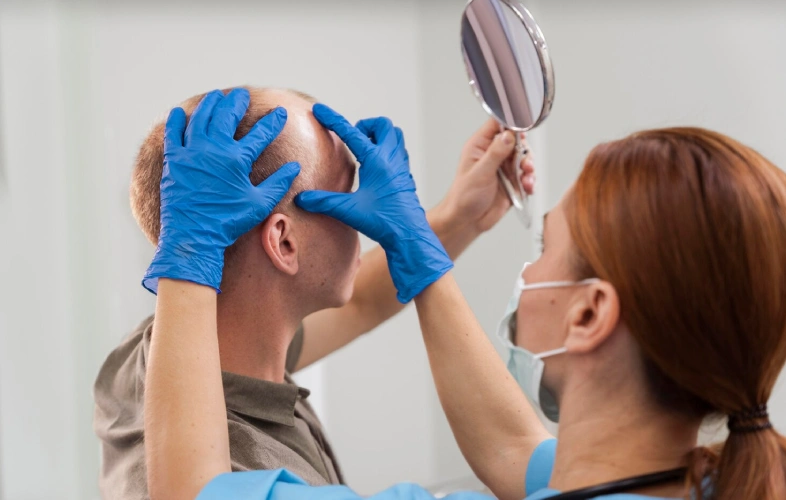
Hair transplant, a cosmetic operation, has around a 90-95% success rate and 100% safety only if done carefully by the right surgeon with a suitable method. Also, when a proper aftercare plan is followed by the patient, the transplanted hair grafts safely heal, and the surgery ends with a natural, permanent, aesthetic restart of the normal hair growth cycle. Dr. Shilpi Bhadani, a top-rated hair transplant surgeon at SB Trichology Clinic, best hair transplant clinic in Gurgaon, attempts to make every hair transplant seeker. Learn how to swiftly and confidently pass through every stage of recovery after a hair transplant.
A hair transplant surgery does not provide immediate results. Patients have to wait for months, probably for around a year, to enjoy the optimal outcomes. Here’s what is normally expected during different stages of recovery:
Hair transplant success starts with careful post-procedure recovery and care. Recover faster and safer with these top hair transplant guidelines:
To prevent the freshly implanted hair follicles from getting dislodged or accidental harm, make sure to follow these dos and don’ts in the first 48-72 hours:
The first week of recovery is the most delicate phase to ensure the survival of the graft. For the protection of the grafts, follow these instructions:
After 3-4 days of getting a hair transplant or when the surgeon allows, have a controlled head and face wash, so that there is minimal crusting and smooth healing.
Do the following:
When scabs form, do not pick them or scratch the itchy area. To control itching, use the prescribed saline sprays or hydrating product.
Heat, chemicals, and sweat can interfere with healing by irritating the operated areas. So, for 2-3 weeks after the surgery, do the following:
Know before hair transplant surgery what is normal. Be thorough with the surgery process, including the recovery timeline, preparations, and aftercare, so that it is easy to set reasonable surgery goals and be less anxious about what to expect after a hair transplant. A stress-free journey is crucial for optimal results.
For maintaining the long-term health and strength of new hair after transplant, do the following:
All scheduled visits to the hair transplant surgeon in Gurgaon are essential to detect any issues that arise during healing, timely detected and treated. So, during visits, make sure to report all problems experienced at the time of healing. This will help prevent serious risks and complications associated with hair transplantation.
Hair transplantation won’t be successful if it's not followed by patient-focused care. At SB Trichology, our registered practitioners create a personalised aftercare plan based on the patient’s existing scalp condition, graft type, and lifestyle. Here is the insider’s advice, the expert aftercare tips to support smooth recovery, and the surgery’s success:
Here are some do’s and don’ts that one can follow for ensuring healthy and speedy recovery after undergoing a hair transplant surgery:
✅ DO’s:
❌ DON’Ts:
The initial recovery period that marks the shedding of scabs and no more redness is often around 2 weeks, allowing the patient’s return to social life. But, thereafter comes the shock hair loss phase of recovery, followed by hair regrowth and thickening. Full recovery is when the final results show-up and that requires patience of around 9-12 months or even more.
Post hair transplant surgery, it’s common to experience mild, temporary swelling, numbness, itching, pain/discomfort, and crusting/scabbing, even if the surgery was performed by a skilled, experienced hair restoration specialist and the patient follows pre-surgery and aftercare instructions. Other possible hair transplant risks and complications include infection, scarring, failure of grafts, folliculitis, shock hair loss, altered sensation, and unnatural results.
It’s strongly recommended to attend all follow-ups scheduled with the surgeon and team during the recovery to keep a check on the healing and any complications. Every patient who experiences infection, profuse bleeding, intense or persistent pain and swelling, necrosis, extensive scarring, cyst formation, folliculitis, and serious reaction or allergic response during the recovery must promptly seek the attention of the surgeon who performed the hair transplant.
Hair regrowth and thickening start within 3-4 months of the start of recovery. A considerable increase in hair density takes around 6 to 12 months. But, the full and final effects of a hair transplant- the area full of healthier, thicker hair- are typically apparent in around 12-18 months following a hair transplant.
A successful hair transplant will yield outcomes that last for a lifetime if the patient follows the surgeon's instructions before and after the transplant. The permanence of hair transplant in the recipient area is due to the transfer of D-HT-resistant hair follicles, which are genetically programmed to defy excessive hair shedding or balding.
If considering a hair transplant in Gurgaon, but still have doubts regarding its journey, let our experts at SB Trichology Clinic guide you. We assure you of the return of desired hair transplant results at the best possible price.
Request An Appointment
Recent Post

 August 24, 2026
August 20, 2026
August 17, 2026
August 13, 2026
July 08, 2026