
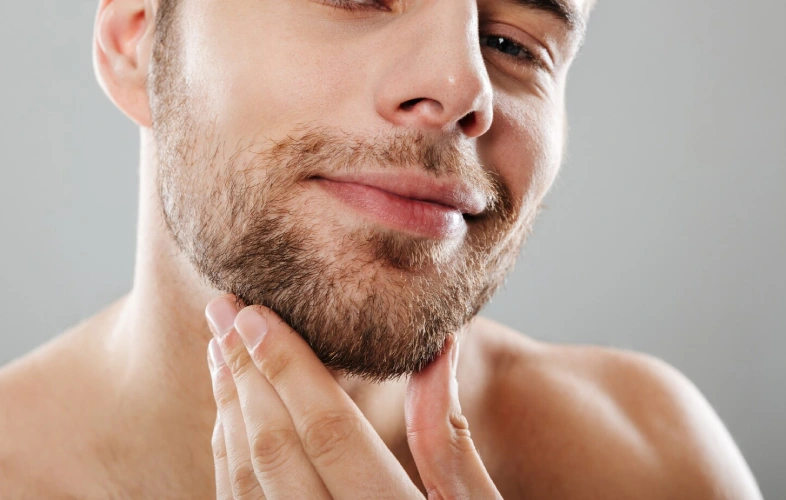
A well-shaped and groomed beard, which complements facial appearance, represents an individual’s style and confidence. Unfortunately, not every adult male grows a naturally thick, even beard. Some men may not grow facial hair, while others may slowly grow a beard or develop a patchy beard. They should seek the best solution, especially given the growing demand for beard restoration treatments in Gurgaon.
Thankfully, the modern cosmetic industry offers two of the most effective solutions for beard growth-related concerns: non-invasive beard growth treatments and beard hair transplants in Gurgaon. Though both have the same purpose of increasing beard density and improving facial appearance, their working is different.
Through this blog, one can understand the need for optimal beard growth and learn about two options to determine which will best meet one’s treatment goals.
The growth of facial hair primarily depends on one’s genetic makeup and hormones, or low androgen sensitivity. That’s why some men grow a full beard in their early adulthood, while others develop sparse or uneven beard growth. Other possible reasons for poor beard growth include an uneven distribution of hair follicles, facial skin trauma or scarring, certain underlying conditions, and nutritional deficiencies. In any of these cases, a professional treatment can help provoke or restore natural beard growth.
Beard growth treatment refers to all the non-surgical procedures that aim to make dormant hair follicles active and promote a thicker, healthier facial hair growth. It is reserved for men who have sparse, patchy, or uneven hair growth in the beard area and are seeking an even, fuller beard.
Mostly sought-after beard growth treatments include:
Beard growth treatments are usually best for healthy men who:
A beard transplant is the surgical restoration of facial hair in the beard area, reserved for men with noticeable spaces in facial hair or an absent beard. The procedure typically involves a FUE (Follicular Unit Extraction) approach, carefully extracting healthy individual hair follicle units from the back or sides of the scalp and implanting them in the beard area.
The hair follicles are one by one placed in tiny slits made in the beard area at a precise angle, depth, and orientation, similar to the existing beard hair, to provide a natural-looking, appealing beard growth.
The transplanted hair first falls out due to the surgery shock, and then by the 3rd month of surgery, new beard hair starts to grow. Hair follicles remain active throughout life and continue to produce hair. In about a year, once the patient has achieved the desired beard growth, he can trim, shave, and style his beard as usual.
A beard transplant is recommended only for those healthy men who:
Experts recommend a consultation with a trichologist or dermatologist, a specialist in beard restoration, for evaluation of these factors, before fixing any option:
Here are the key differences that one can know more about these beard restoration treatments and which option to opt for:
| Features | Beard Transplant | Beard Growth Treatments |
| The Basics/ Procedure | It is a minimally invasive hair restoration, a FUE hair transplant, where healthy hair follicles from the back or side of the scalp are moved into the patchy or beard-less areas to shape and fill the beard. | It refers to all non-surgical beard growth solutions like medications, serums, low-level laser therapy, P-RP therapy, microneedling, and lifestyle changes to encourage natural beard growth. |
| Results | After the beard hair transplant procedure, the implanted hair follicles gradually settle into the treated area. Initial healing takes a few weeks, and new beard growth typically begins after a few months. Over time, the transplanted follicles grow naturally, leading to improved beard density and fuller facial hair. The final results develop progressively and are long-lasting, as the transplanted follicles continue to grow like natural beard hair. | The results are variable based on the chosen option. Existing beard hair gets thicker, healthier, and stronger, and gradually the beard density increases. |
| Effectiveness | It works even for bald regions of the beard where hair follicles are missing and can help completely design a new beard that complements the face. It is effective for scarring or genetically induced beard patches. |
It works only for areas of the beard with small patches or areas where follicles show delayed natural hair growth. |
| Comfort Level | The procedure is performed under local anaesthesia to ensure comfort during the transplant. This numbs the donor and recipient areas, making the process largely painless. In some cases, mild sedation may be used to help the patient relax, depending on individual needs and the clinic’s protocol. | Usually, no anaesthesia is required; the treatments are tolerable. |
| The Recovery Timeline | Initial recovery takes 1-2 weeks and involves temporary crusting, swelling, and redness. New beard growth starts after 3-4 months, and full outcomes are visible in 9-12 months. | Each treatment has a slightly different recovery period, shorter than a beard transplant. For beard growth using topicals, 2 to 3 months is expected time for results to appear, while 2-3 PR-P sessions are needed for visible results. The maximum results are only achievable after 6-12 months. |
| The Longevity of Results | The transplanted hair follicles are usually taken from areas of the scalp with stable hair growth. Once they adapt to the beard area, they generally continue to grow naturally over time, helping maintain fuller beard density with long-lasting results. | Resulting beard growth is often temporary, and if sessions are discontinued, the beard patches may again develop. Touch-ups are required. |
| The Cost | It is a one-time procedure with a high upfront cost. The price depends on the FUE technique chosen, the surgeon's expertise, the surgical facility, the anaesthetist's fees, and the required number of grafts. | The cost depends on the chosen treatment; generally, the initial cost is low. But the price gradually accumulates, depending on the number of repetitions required, and may end up being high over the long run. |
| Best For | Men with severe beard gaps or absent beards, strong donor scalp, need for high-density, permanent results, and wish for a new beard shape. | Men with mild-to-moderate beard patchiness; preference for non-invasive beard growth that lacks density; and the comfort of gradual changes to beard appearance. |
A beard transplant can give long-lasting improvement in density and shape, but it doesn’t look “done” immediately. The final outcome builds over months, and how it holds up long term depends on your donor hair, skin quality, technique, and aftercare.
Transplanted hairs are typically taken from the scalp donor zone, which is more resistant to pattern hair loss than other areas. That’s why many patients enjoy long-lasting results. However, it’s still important to be realistic:
When planned well, long-term results look natural because:
One practical detail: transplanted hair may behave more like scalp hair (especially early on), so it may feel slightly different in texture or growth rate at first. Over time, it usually becomes easier to manage with regular trimming and grooming.
A hair restoration expert helps you decide between a beard transplant and a beard growth treatment. It relies on:
Generally, beard growth options are ideal for young patients, those with patchy beards who are still experiencing hormonal loss, and those who can’t afford a beard transplant. A beard hair transplant is ideal for older patients, those with a stable pattern of beard hair loss, those who have failed to grow back a beard with beard growth options, and those who envision a permanent, new beard style.
Beard growth treatments and beard transplants, both are safe and effective, professional approaches to increase facial hair density and thickness in the beard region. They differ in whether the patient requires just stimulation of existing hair follicles or needs implantation of active hair follicles from another body part.
Generally, men with little uneven or patchy beard can take advantage of non-surgical beard growth treatments, while men seeking fuller, long-lasting, natural beard can undertake beard transplantation.
To confirm the option, consultation with a reliable hair specialist or trichologist is necessary. A specialist can help you choose the treatment that will suit your goals and expectations by evaluating your beard hair loss pattern, the facial skin condition, reviewing your concerns, and discussing your goals and expectations.
The dense, appealing, natural beard growth is achievable and maintainable only with a beard transplant performed by a seasoned surgeon at a reputable clinic. At our hair transplant centre, beard transplant and other hair growth treatments are performed by licensed, experienced specialists using the most advanced techniques and technologies. We offer customised beard designing, modern beard transplant, safe and effective beard restoration, and comprehensive care and guidance.
Beard transplant surgery at SB Trichology Clinic will benefit you if you are seeking a lifetime, natural-looking solution for the beard area with thinning, sparse, patchy, or absent hair. The key advantages of this minimally invasive surgery include:
Beard hair transplant can help you grow a lush beard as it adds new hair follicles in sparse, absent, or patchy parts of the beard zone. But the desired beard growth is noticeable after a few months of the hair follicle placement. The beard growth treatments just work to stimulate the existing hair follicles to gradually grow healthier, thicker hair.
A beard hair transplant must be considered by healthy men with little to no beard growth and enough donor hair density. Ideally, it is for those who have genetic or hormone-induced beard hair loss or scars in the beard zone. The surgery helps create a well-shaped, fuller natural beard, which can be maintained for a lifetime.
A beard transplant involves the transfer of viable, DHT-resistant hair follicles from the scalp to the beard region. Once these start to grow new hair, they can follow all stages of the hair growth cycle normally for life. For beard growth treatments, the beard density has to be maintained with ongoing sessions and proper maintenance care.
Beard growth treatment must be chosen by those men who have some facial hair in the beard area, but not the desired thickness and density. The procedures like topicals, hair growth promoters, and PRP hair therapy can help stimulate the existing roots of the facial hair to cover up the mild beard patchiness.
For some men, pairing beard growth treatment with a beard transplant can provide enhanced outcomes and healing. The beard growth treatment, like PR-P therapy, is usually recommended post hair transplant to encourage the tran
Careful planning and execution are required to achieve a fuller, healthier, and best beard style. With this in mind, Dr. Shilpi Bhadani at SB Trichology Clinic can map the best path to reach your beard goals.
You can rest assured of the success of the chosen non-surgical or surgical beard hair growth option. Whichever option is recommended, it will match your needs, goals, and lifestyle and will not strain your budget.
To receive a personalised beard growth plan, schedule an initial consultation today with a beard hair transplant doctor.
Request An Appointment
Recent Post
 August 24, 2026
August 20, 2026
August 17, 2026
August 13, 2026
July 08, 2026